
TIFF Part II: Dreams and Reality
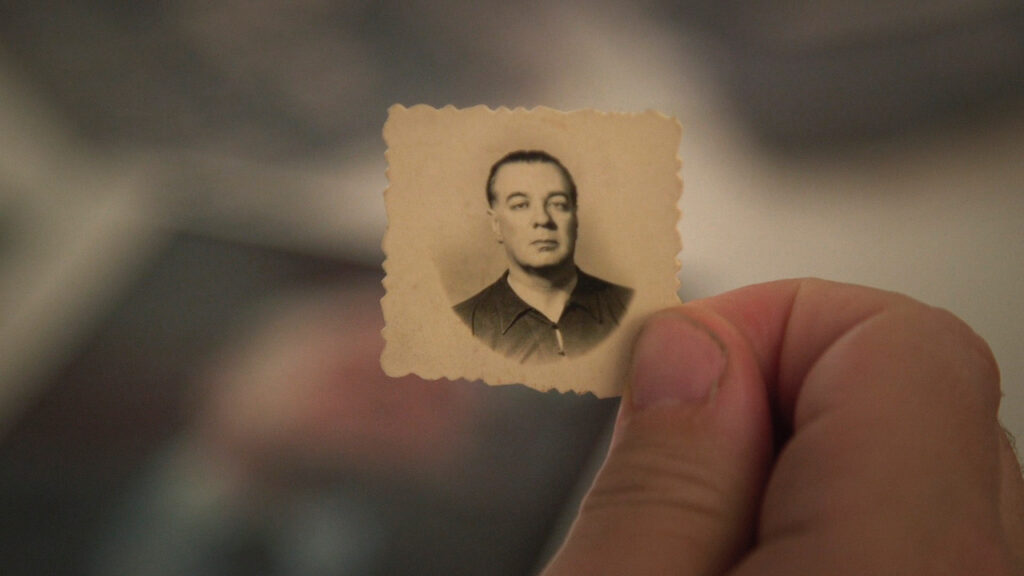
Attending the Toronto International Film Festival is not dissimilar to an international flight, wherein every step of the process—booking, getting there, learning the woeful limitations of your pass, getting through security—feels like a cosmic indignity, and you can only persevere with the belief that you are ultimately going to a beautiful place that will make it all worth it.
Before a film starts, the cinephile-oriented advertising of TIFF’s annual pre-roll provides festival-goers with an early test of viewers’ patience. A phallic RBC-sponsored Brontosaurus counsels us to dream big; a short insert encourages us not to turn off our phones; a low-rent animation urges us to use those phones to buy a 50/50 jackpot ticket. What are the odds? a woman’s voice asks, What are the odds you find yourself in an elevator with your favourite actor, only for the ride to end way too soon? Looking around the theatre at my first press screening, for the 83-year-old Mike Leigh’s Tender Loving Care, this star-studded experience did not seem fated for me. But as the bracingly unstylish credits began to roll, I was no longer thinking about the cash pool, or Ticketmaster, or the Béla Tarr phase that CEO Cameron Bailey reluctantly admits to his overbearing cab driver in yet another advert.
You won’t be able to experience a Wavelengths shorts program anywhere else.
Mike Leigh aside, to say that it’s merely fashionable to complain about TIFF would be to absolve the powers that be of too much responsibility for their continued disembowelment of the “people’s festival” experience. But just as you wouldn’t catch any other major festival premiering I Play Rocky, you won’t be able to experience a Wavelengths shorts program anywhere else, either.
The first short film that I caught at this year’s festival was John Smith’s Two Pids, a five-minute triviality that couldn’t have taken more than a few hours to complete. The work—a rather minimally stuffed slideshow accompanied by Smith’s wry English musings in voiceover—tells an anecdote from the last time Smith attended the festival for 2024’s Being John Smith. After riding a King Street elevator with a man he thought to be his hotel’s night manager, he realized his co-passenger to have been none other than Tom Hiddleston, himself of the BBC TV show The Night Manager. The title derives from Smith’s realization that the two shared a nickname—Pid—in their respective youths, Smith’s acquired due to his diminutive stature, Hiddleston’s as an abbreviation of Piddleston. Charming to the extreme, I was surprised to be suddenly moved to tears by Smith’s regretful closing remark: “I would have asked if he too sometimes wonders whether the world only exists in his imagination.” An iPhone photo of the CN Tower provides the imagery.
These words rattled in my head through the rest of the shorts program, titled “House and Home.” In Rita Ferrando’s After Image, the Canadian-Argentine artist brings into contrast photographs from her grandfather’s personal archive alongside her own DV and 8mm footage from various trips to Argentina. Pointedly sensitive to the varied textures of her images, Ferrando stages an imagined conversation between herself and her grandfather that insists on a disjuncture it is nevertheless determined to cross. Next came Jiaqi Yu’s Moon Palace, in which the Chinese director makes use of a number of startling visual tricks, some simple, some less so: a laptop on a table in a darkened room struggles to play a video of a birthday celebration while the blue light reflected on the table’s surface begins to seem another world at which we can only squint; a little while later, Yu plays a sequence in negative which, when it freezes, is layered with positive cutouts on top, continuing the motion in fragments. These two parallel planes of experience are subsequently exploded by Danaya Chulphuthiphong’s Microcosmic Orbit: Encased. Situated at the edge of this reality/imagination divide, Chulphuthiphong blurs 16mm footage of two enclosed landscapes, a wildlife conservatory and an aquascaped aquarium. With great efficacy, she manipulates the viewer’s sense of scale: staring intently into the tiny pool at the centre of a garden-in-miniature—destabilized already by the buzzing wildlife on the soundtrack—we are stunned to see a massive koi fish swim into frame. Rotating these scenes forces the viewer’s perspective into an imagined third position between the micro and the macro, the real and artificial. Such is the promise of the short film, that a tiny container can hold so much. The credits reveal that the bit of algae that had caught my attention in fact hailed from NASA’s archive of the telescopically-observed Crab Nebula.
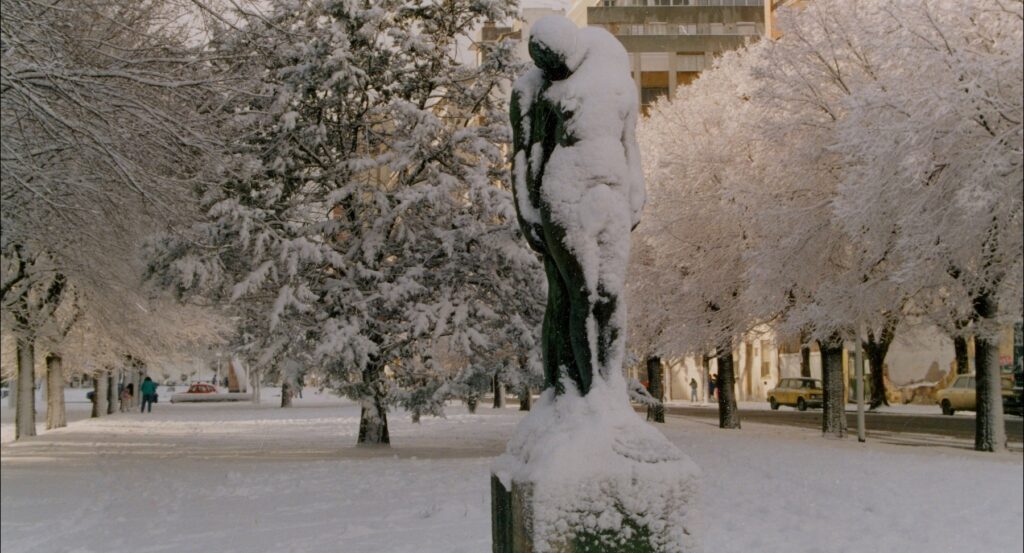
Nowhere was the power of working in miniature in greater evidence than in the recently restored films of Armenian filmmaker Artavazd Pelechian, who once said of his work to the French film critic Serge Daney that “the whole film is present in each of its fragments and each frame is comparable to a coded genetic cell.” Made between 1966 and 1992, the shorts offer a sensory history of the Armenian Soviet Socialist Republic. In We (1969), Lenin beckons a crowd forward, a soot-soaked worker swings a pickaxe, and scores of hands carry an unknown casket through city streets. History is felt, not told here, and Pelechian’s montage repeats images like motifs in a concert score, demonstrating that progress and revolution are cyclical forces. For Seasons of the Year (1975), Pelechian shrinks the scale, documenting the activities of Armenian shepherds through the turning of the seasons. The most expedient way to transport a sheep down a snowy hill, if Seasons is to be believed, is to ride it like a toboggan. Witnessing this sheep’s face pressed into the snowy slope as it glides downhill, a sense of great potential and providence washed over me, a sudden consciousness of deep and unknowable connections of every gesture to history, the world, and the cosmos. I wonder if the sheep felt the same way.
One reality supplants another, and memory, imagination, and the forces of history commingle to replace one past with another.
Iranian-Canadian Parastoo Anoushapour’s long-gestating Peacocks Come With the Clouds attains a similar feeling through wildly different means. A series of experimental theatre workshops for schoolchildren in a Kurdish-majority town at the border of Iran and Turkmenistan provide a loose structure for the film. Anoushapour shoots the children interacting with intricate wedding embroideries that she collected over a number of years, but the film gives itself to the children’s own forms of meaning-making, which connect to and depart from history. At one point, noticing a camera Anoushapour has positioned above them, one boy shrieks, “They want to film us and take it to America!” Later, pointing coloured flashlights at their costumes, one child announces, “I’m a peacock from space, I come from Mars.” With an intuitive logic that is equal parts grounded and mysterious, the film spirals in manifold directions. Anoushapour deploys sparsely lit shots of the embroideries and children experimenting with vocal effects that give way to a detour through a functioning slaughterhouse. She weaves these disparate points together through an imaginative impulse that begins with the children, while her filmmaking further erodes the terrain between the real and the imagined to the point of dissolution—an experience that seems at once of this world and beyond it.
Set in another border town is Toronto-based Yuula Benivolski’s The Black Box is Orange. The filmmaker grew up in Shlomi (pre-Nakba Al-Bassa) less than a kilometre from the Lebanese border, before moving to Canada and renouncing her Israeli citizenship. Her documentary examines the lingering visual traces of a place with a highly contested past, taking from different state collections and her own personal footage. Benivolski grew up with a limited knowledge of her town’s history, and she recalls realizing that “Every inch of land I stepped on here used to be someone’s home.” She scans her own unreliable memories and empty photographs for traces of this erased past, a search that ultimately takes her to the IDF archives. One reality supplants another, and memory, imagination, and the forces of history commingle to replace one past with another.
Benivolski finds herself drawn to the elements that have persisted: the concrete train platforms of Palestine Railways, or a white house atop a cliff, seen in 19th-century engravings that stand today as part of an army facility. The film registers a desperation to glimpse the histories that have been scrubbed from a place. In one lyrical chapter, Benivolski copes by developing her film in water taken from the restricted military zone that has come to encompass her childhood beach. She soundtracks the resulting black and white psychedelia with “Matar Al Sabah” by Lebanese folk/funk group Ferkat Al Ard, who sing in Arabic of a rain that will “sweep the sins of the city.” It’s a sweet indulgence in a film that otherwise proceeds with more rage than love, the indexical connection to the water also providing the means for the image to display more than what it sees.
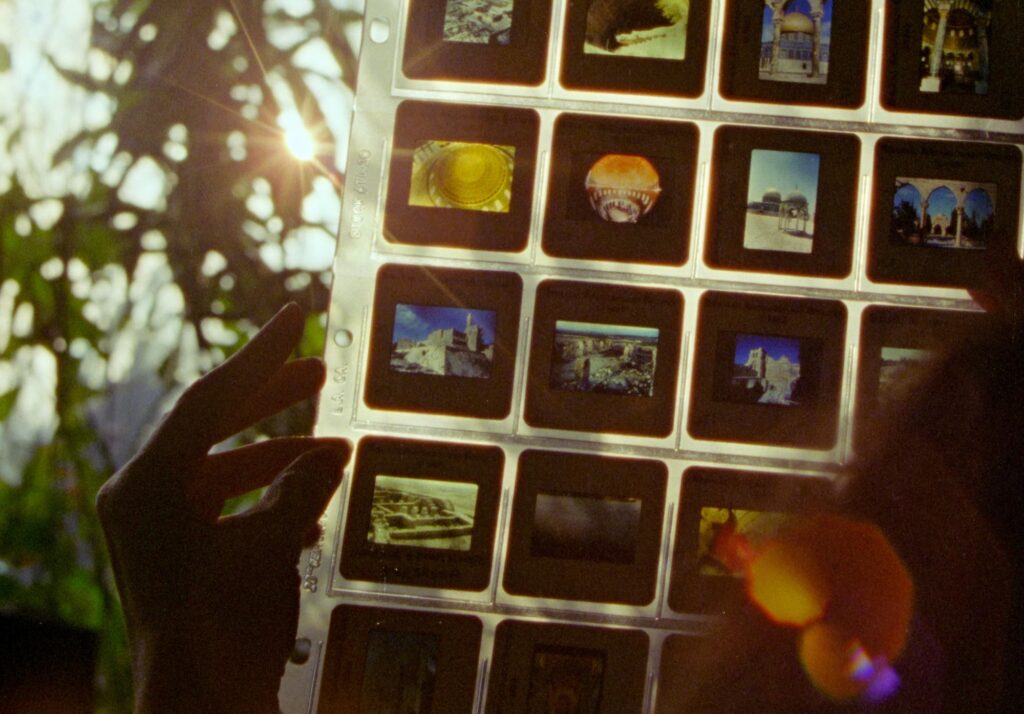
Nowhere was the boundary between fantasy and reality more thoroughly surveyed in this year’s festival than in Mariano Llinás’ mammoth Life of Jorge Luis Borges. While a five-and-half-hour documentary seems an odd fit for a biography of an author whose stories never exceeded 14 pages, Llinás devotes himself to the kind of project that Borges describes in “The Life of Isidro Tadeo Cruz”: “a book whose subject can be all things to all men […] since it is capable of almost never-ending repetitions, versions, perversions.” Commissioned by New York’s Institute for Studies of Latin American Art, the work pairs Llinás—who can only be described as a kind of Argentine Orson Welles—with the silvery Ernesto Montequín, a Borges scholar of mysterious origins. Chasing down every Borgesian expert and artifact they can find across at least three continents, the project only seems to grow and expand as the pair are seduced by stray footnotes and postcard marginalia. The film becomes something of a paranoid masterwork whose boundaries grow less certain by the minute.
Llinás and Montequín vie with one another—as with the ghost of Borges—for control of the story. Llinás builds at least as much disappointment as discovery into the film: inspecting one of the author’s notebooks, they find that a pair of “famed” (among Borges scholars) tigers allegedly drawn by the author were likely doodled years later by his nephews. Later, when it is essential for a blue notebook to be green in order to correspond to its description in a story (as Llinás’ hypothesizes), we witness the director order his camera operator to adjust the colour temperature accordingly. As in Borges’ 1940 short story “Tlön, Uqbar, Orbis Tertius,” the film becomes obsessed by these willed and unwilled incursions of the fictive world into reality. When Llinás discovers a misprinted journal naming his subject “Jorge Llinás Borges,” my theatre erupted with more laughter than I had thought possible in the fourth hour of a documentary. A universe—or at least a whole-afternoon-length documentary—contained in a typo.
Each year, for ten days, this dream world descends on my town and leaves me with a head full of jumbled images and a bad cold.
These images spoke to one another over my ten days and thirty-some films at the festival. Some conversations were more productive than others: I did not, for instance, locate much dialogue between the Pelechian films and the regrettable Helen Mirren vehicle A Talent For Murder. Attending a late screening of Mexican-Canadian filmmaker Nicolás Pereda’s Everything Else is Noise, however, proved an experience that would loom over the rest of my festival: after Pereda’s simple and quick (70 minute) sketch of the life/art venn diagram, similar-minded experiments such as Sebastian Brameshuber’s London and Lee Chang-Dong’s Possible Love seemed sweaty exercises in arthouse sentimentality by comparison.
Pereda begins with an extended credits sequence played atop a Mexico City traffic jam, though the titular noise hardly relents through the rest of the picture. The film takes place entirely in an apartment belonging to single mother Tere and her daughter Luisa, which their friend Rosa has asked to use as backdrop for an interview with a local news station about her life as an artist. All three women are experimental composers, though none of them have much to show for it. Luisa’s absent father, Pereda gradually reveals, is one of the country’s most famous composers. The well-enough meaning interviewer, Lazaro, has a series of intelligent-enough questions that cannot quite conceal his overriding interest in the absent father, who lives with his new family and enjoys a full schedule of internationally-adorned laurels. Meanwhile, Lazaro’s bare bones production is constantly undercut by the noise of life everywhere: the persistent traffic from the street; the neighbour’s yappy dog; unpredictable power outages; incisive conversations that, upon conclusion, reveal themselves to be not sufficiently mic’d. Everything Else is Noise elucidates the fundamental contradictions of realism in filmmaking with the simplest of means, capturing a chasm between what is admissible in fiction, or even documentary, and the actual texture of the everyday.
Following each of these experiences, I was thrust back onto Richmond or King Street West, the CN Tower looming overhead, into a godforsaken Second Cup or a rush line where the love of my life—per another pre-roll ad—was decidedly not. There it was easy to think that I had imagined the ascension of, for example, John Abraham’s Report to Mother. Each year, for ten days, this dream world descends on my town and leaves me with a head full of jumbled images and a bad cold. But John Smith really did get in an elevator with a celebrity, and the ride really did end too soon.
Dylan Adamson is a critic and curator from Toronto. His writing can be found at Indiewire, Filmmaker Magazine, The Globe and Mail, and elsewhere. His curated programs have been hosted at Anthology Film Archives, TIFF Cinematheque, LA Film Forum, and other venues.