
On Realist Fiction: A Conversion Narrative
For a long time I used to sneer at realist fiction. For what I saw as repressively quiet stories about ordinary people doing ordinary things composed in an ordinary style that seemed to vanish as you read it, my disdain was great. I wanted intensity, desire made loud, explicit everything. Nothing underwhelmed me more than profound humanness tucked inside small gestures and subtle imagery. That was realism, I thought.
Of course, as I’ve come to know, defining realism is not so straightforward. Like any category—gender, for example—realism is both tangible and not, coherent and not. There’s as much diversity within realism itself as there are similarities between these realisms and the non-realisms against which they are defined. And, the term means multiple things. Historically, it refers to a literary movement that emerged in the second half of the 19th century in North America, England, and France as a reaction to the excesses of Romanticism. Nineteenth-century Realism constructed “real life” via concrete, objective details and characterization; favoured the common person and ordinary settings over the exotic or gothic settings of Romantic literature; emphasized the idea that humans have agency over their lives; and strove to achieve verisimilitude, i.e. to mimetically “capture” lived experience through literature.
I wanted literature to break me open and break me out. I wanted it to give me experiences, not reflect my own (quite limited) experiences back to me.
Despite interference from countermovements like modernism and postmodernism, each believing they were capturing the contemporary experience, this movement morphed into a popular mode of 20th and 21st century literary fiction, one that has been repeatedly certified as the way to write within North American creative writing programs. Then again, this seems to be changing as new generations of creative writers and their instructors, like the modernists and postmodernists before them, reject what has become the normative mode of their era and its obliviousness to the era’s dissolution of any shared understanding of objective reality. As André Forget puts it in his introduction to After Realism, “Gentle musings about love, time, memory, and death from financially comfortable Baby Boomers stick in the craw of a generation for whom paying rent is an increasingly difficult proposition. … The exhaustion with realism is not just a matter of taste but arises from a sense that a realist style can’t cope with reality as we now experience it.”
Forget’s description, it’s worth noting, mirrors my old, limited understanding of this tradition, which boasts many more strains than the “gentle musings” kind. The many shades and stripes of realist fiction now include minimalism, hysterical realism, K-Mart realism, social and socialist realism. There’s what Patrick Cottrell has called, to describe the work of Jane Bowles, “curdled realism,” and what Brandon Taylor has called, of Rachel Cusk’s writing, “apologetic realism.” But, typically, when writers and critics invoke “realism” without a modifier, it often signifies quiet rumination encased in unobtrusive prose, and so comes to represent a kind of conservative aesthetic.
I’m thinking about realism now because of the relative dearth of realism in fiction by transmasculine writers. Spurred by the recent publication of Max Delsohn’s terrific collection Crawl, I’ve had conversations with friends and students who are hungry for more realistic fiction about everyday transmasc life. They—we—want to see ourselves in fiction, and realism, with its focus on the ordinary and mundane, would seem like the apropos mode. While there are certainly more instances than Crawl, they are few and far between. Where is all the transmasc realism? Or, perhaps my question is, “What are we writing instead, and why?”

When I was a younger writer, it was useful to have an antagonist in realism. I was not good at writing it, for one thing. My attempts were as shallow as my understanding of the social world and my place within it. I did not yet understand myself as queer or trans, did not fully understand, in 2005, what these words meant, and so was living, by all appearances, a normative life. I was a shadow self, a smokescreen, at a remove from myself and everyone around me. I remember a painful exchange with a friend who had grown frustrated by my retreats into blankness, and sat me down one day for a talking-to: Sometimes I’m like—I’m trying to have a real conversation with my cool friend. Where does my friend go? How overwhelming: being seen. I broke into sobs. I’m sorry… I managed. Sometimes I feel like I’m not even a person. My friend laughed, amazed and mortified by my emotional intensity. You’re a person! You’re a person! I see you! You’re real! What I’m saying is I needed therapy. I’m also saying that it would be an overstatement to say that I did not “see myself” in realism, because I would not even have recognized that self were I there.
My first year of graduate school was the same year that novelist Ben Marcus mounted a battle horse named “experimental fiction” and used it to clomp over Jonathan Franzen in the pages of Harper’s Magazine. Marcus was responding to a handful of articles Franzen had written that expressed a virtuous disdain toward fiction he deemed too “difficult” for the common reader. His targets ranged from Fiction Collective Two, a collectively run publisher of innovative fiction, to postmodern behemoth William Gaddis. Marcus’ now-infamous takedown of Franzen, “Why Experimental Fiction Threatens to Destroy Publishing, Jonathan Franzen, and Life As We Know It: A Correction,” reframed the conversation as a fight between realist (presumably “accessible”) and experimental (presumably “opaque”) narrative. Whereas Franzen positioned “difficult” writing as elitist, Marcus countered that the true elitists are those who “caution the culture away from literary development, who insist that the narrative achievements of the past be ossified, lacquered and rehearsed by younger generations.”
The publication of Marcus’ essay launched a brief war between realist and experimental fiction that prompted countless think pieces from literary critics and bloggers across the still-adolescent web, many of whom came into it already exhausted by this recurring debate. Jess Row in Slate: “Isn’t it time we allowed the scorched-earth rhetoric of avant-gardes and ancien régimes to drift, like the tissue-thin sheets of an old aerogramme, into the dustbin of history?” Sherman Alexie in a letter published in Harper’s: “Does Ben Marcus, educated at NYU and Brown, employed by Columbia, and published by Anchor, Vintage, and Harper’s, truly believe that he is an excluded experimentalist? Does he honestly believe that Jonathan Franzen, educated at Swarthmore, once employed by Harvard, and published by FSG and Harper’s, is somehow more elitist? … Is there really much difference between Marcus and Franzen?” On the side of experimental fiction, Susan Steinberg, in one of a set of responses to Marcus’ essay from FC2 authors, recalled her scheme as a graduate student to publish a scathing essay skewering formulaic literature in favour of avant-garde innovation. Even then, she writes, she was “a little bored with the fight.”
I was not bored but energized. The conversation was my entrance into a new iteration of a debate that had swung fiction’s aesthetic pendulum for decades. I found Marcus’ perspective affirming and galvanizing, and I took it seriously as a young writer just beginning to understand myself as an artist (and already proclaiming myself frustrated with most literary art). To some extent I adopted the typical bravado of a young artist rejecting the dominant aesthetics of the time in order to support their belief that their own writing is different, essential, new, and that it needs to be written. My frustration was also typical of many young people who hunger for intensity, sensation, urgency, rupture: I wanted literature to break me open and break me out. I wanted it to give me experiences, not reflect my own (quite limited) experiences back to me. The kind of fiction that Marcus described—writing that pushes language past its limits, that “proves there is always more to think and feel, always another mind to engage and enter, always intensities we did not know existed”—seemed to promise this. I mounted my own battle horse. While my gender and sexual identities remained a fog, my identity as a writer was clear: I was experimental and I was proud.
All fiction is an experiment in forging reality.
In celebrating writing that refused artistic conventions and assumptions to produce results that might be exquisitely “strange, foreign, remote, complex, difficult,” Marcus’ essay gave me an aesthetic politics to latch onto. With the door closed to realist fiction, I went everywhere else. I went to Kathy Acker, Dennis Cooper, Georges Bataille, Samuel Delany, Octavia Butler, Chris Kraus and Dodie Bellamy, Kafka and Kelly Link. I went to a FC2 summer conference, where I got food poisoning and publicly barfed all throughout the hallways of Portland State University’s student center. I went to post-postmodernism, to the Weird, the New Weird and the New Fabulists, to avant-pop and new hybrid genres, to sex writing and erotic literature, to feminist and queer autotheory (before it was called that), to zines and RE/Search, to Semiotext(e) and experimental life writing, to the canned comforts of the juvenile fiction I read as a kid. All of this writing spoke to me more than the apparently “genreless” norms of realist fiction.
I understood “experimental” as a stance against realism, and “experimental fiction” as a distinct mode—granted, one that frustratingly centered (mostly white, straight, cis) men. My goal then was to flood it with girlhood, smuggling lowbrow, feminized narrative forms like teen romance and YA girl-group series into this man-filled terrain. In this way—ten years before I would start (then stop, then restart) masculinizing HRT and step into nonbinary transmasculinity—I was also certifying my status as girl to myself, my only skeptic.
In the fall of 2006, my graduate program brought Ben Marcus to campus for its Visiting Writers series. I got paired to read with him, which meant that I opened the event and made my literary “debut.” I read an excerpt from my novel-in-progress which took the form of an academic essay about Sylvia Plath; halfway through, my narrator disrupted the form by yelling about, oh, patriarchy probably. It was Acker-lite. And it killed. I don’t remember much about Ben’s reading because I spent that time in trembling triumph, reliving the power I’d felt when being applauded for yelling at people and calling it art. I had disrupted the normative narrative! I had broken through the sedate culture of the literary reading! Experimental fiction ruled.
Revisiting this conversation now, a few things seem notable. First, the conversation is largely dead; both categorical poles look and signify differently. As literary scholar David James observes in a 2021 essay on experimental fiction, in the early aughts this category was code for fiction with an allegiance to and nostalgia for the late-20th-century postmodern agenda of “subverting realist conventions in pursuit of avant-garde majesty.” Further into the 21st century, “experimental” is less a genre or tradition than a range of strategies. According to James, today’s more expansive range of experimental approaches includes a desire to “occupy multiple modes of expression” and participate in multiple genre models and styles—as well as “a renewed interest in representation’s possibilities (rather than its deficiencies or betrayals).” Experimental craft strategies are tools that we use, not parties we pledge allegiance to.
Notable, too, is that the two categories of realism and experimentalism are not necessarily opposed (and maybe never were). Autofiction, for example, has become an increasingly popular mode of experimental realism, one that performs a meta-realism in between naturalistic fiction, life writing, and metafiction, where the question of how real a text is—meaning how non/fictional—is often at play. Writers also fuse autofiction with other modes: Michelle Tea’s Black Wave (2016) throws the autofictional Michelle into a dystopian near-future; Patrick Cottrell’s Afternoon Hours of a Hermit (2026) is an existential noir and an experiment in meta-autofiction. These are not not experimental novels, but to describe them as such would mean something more about their strategies—their genre-mixing and craft tricks—than about their participation in “experimental fiction” as a genre in itself.
The word “realism” also now verges on meaningless. In today’s literary culture, it is invoked more often against counter-realist genres like science fiction and fantasy than against experimental fiction. But as Lincoln Michel has noted, there are “countless ways reality can be skewed, distorted, or heightened” in fiction: “When we look at the scope of literature, very little of it fits neatly into the realist box.” Or as Cottrell put it recently: “Realism doesn’t exist!” There is no purely mimetic realism in literary art, because the reality is that literature is artificial, made of words. Fiction relies on the frictions it produces between artifice and reality: “experimental” fiction plays those frictions up, “realist” fiction plays them down. All fiction is an experiment in forging reality.
Between the publication of Marcus’ essay and now, there has been a period of remarkable flourishing for trans fiction. In naming this I am, following poet and trans literary studies scholar Trish Salah, cautious to avoid making any claim about trans fiction’s “emergence” that overlooks a longer history. Trans fiction is new and not new, and it is shaped by the same systems of racial and class privilege that have shaped literature and publishing markets as well as trans communities at large. What is new is its abundance and arrival in mainstream publishing. Trans fiction is motley, heterogeneous, exultantly incoherent, a genre of many genres. If any remnants of the experimental/realism debate exist, trans fiction reframes it through the specificity of transness and the needs to which this body of work responds.
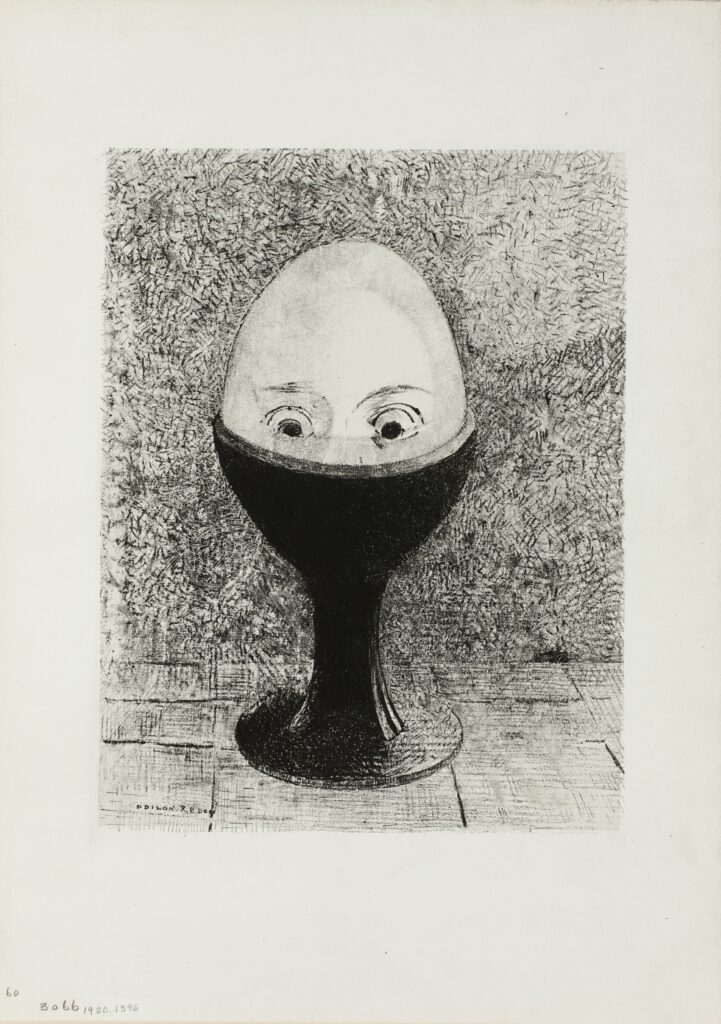
I dyked out, I queered out, I transed out. I weirded out. I cracked the egg from inside and dragged myself from the shell, slimy and shuddering.
For example, “realness” remains a fraught, nervous status for many trans people. Before “cisgender” came into usage, as Rachel Pollack notes in her 2019 essay “Trans Central Station,” writing about coming out in the 1970s, the terms “real man” and “real woman” were used to differentiate non-trans people from trans people. Within ball culture in the 1990s, “realness” connoted passability. TERF-ism and the “gender-critical” movement of today have used baseless claims of “real” and “not real” gender to repudiate trans women. The U.S. federal administration erasing trans people in its definitions of gender and the rollout of related policies like passport corrections, anti-trans bathroom bills, and restrictions on gender-affirming care for trans youth and trans athletes in sports: these are all strategies of denying our existence as real.
So, there are political stakes to trans realism. In her 2022 essay “Whose Trans Realism?,” Kay Gabriel uses the occasion of the republication of Imogen Binnie’s now-canonical novel Nevada (2013) to explore trans realism and its reproductive capacity. Through her reading of Nevada—as well as fiction by Bryn Kelly and Jackie Ess’s novel Darryl (2021), which references Nevada and to some degree extends its storyline—Gabriel articulates “a program of satiric, but not caricatural, trans realism in which most people are poor but not powerless and act out on the world in often foolish and immediately resonant ways.” Like other traditions of realism that developed in a dialectical relationship to Romanticism, modernism, and postmodernism, this mode of trans realism has specific antagonists: the pathologizing sexological narratives and spectacularizing memoirs of the mid to late 20th century, as well as what Casey Plett has termed the “gender novel” of the turn of the new millennium and early oughts.
As Gabriel suggests, it’s precisely realism’s normative capacities that make it a potent force for intervention by subjects who have been ejected from that story. To smuggle trans life into the normative narratives we call realism is in this regard an act of infiltration and subterfuge. That many readers have credited Nevada with helping them to transition, Gabriel notes, suggests that “realism does something.” It makes reality ours to claim, to stylize, to distort, and in modeling some possibilities of quotidian trans life, it feeds and facilitates the replication of transness. Trans realism is deeply and often purposefully engaged in the project of forging reality.
Another thing, or series of things, happened in the long stretch of time between my youthful zeal for experimentalism and now: I broke out of imposed categories and stepped into new ones. I dyked out, I queered out, I transed out. I weirded out. I cracked the egg from inside and dragged myself from the shell, slimy and shuddering.
While I can’t say trans realism facilitated that transition, it definitely affirmed it. Reading Canadian writer Casey Plett’s first short story collection A Safe Girl to Love (2014) on the train while I was visiting New York for the Lammys ceremony in 2015, a few weeks after I’d started T the first time, made me real. The world of these stories was trans, and so, uncannily real. That book was my friend. How overwhelming. It was telling me how real I was. It saw that I was a person, and that I was real.
But, my work has not been realism. It’s been practically everything, every other genre. It wasn’t simply that I was bad at writing it, nor that I was Marcus-pilled. I was bad at writing it and Marcus-pilled because realism didn’t match my experience. I might even say I had a dysphoric relation to it: is this my mirror? No. I needed to find other visions, portals, paths. Echoing Gabriel, I’d argue that non-realist modes, too, do something. They break us out of normative ways of reading and writing to yield new ways of thinking and being. Here’s Pollack, on turning to science fiction in the 1970s: “No, I was not trapped in the wrong body. I was trapped in the wrong universe. In order to become who I was, I had to break the world open. I had to embrace a kind of science fiction life. Or maybe a magical life, by which I mean the ability to experience the world, and connections, and myself, in ways that did not fit the standard model of reality.” Non-realist modes like science fiction may give us alternative paths for negotiating a dysphoric relationship to not just the gendered and sexed body but the whole “standard model,” including the social world that’s built around that body and the conservative realism that purports to mirror that world. Weird fiction, experimental fiction, fabulism: these were the nonstandard models of reality that helped me break my own world open, producing new realisms that made new realities—realities in which humans become slugs and girls become men.
Girls do become men. Whether that arc bends towards trans expression or compulsory cis-ness depends on the story and its generic conventions. Due to their lived experience, I might argue, trans fiction writers have a particular penchant for creating new forms, for experimenting with and reconstructing our realities. Because trans is always already nonstandard, at once real and experimental, it scrambles any realist/experimentalist framework. I no longer wish to besmirch realist fiction or clobber it with my war hammer, especially when there are far more powerful antagonists to bash. To respond to the current siege against trans life, trans writers must deploy all of the tools and strategies at our disposal to theorize and forge our realities. “Stealing” realism to build a new trans-centered reality is one strategy among many.
Megan Milks (they/them) is the author of Margaret and the Mystery of the Missing Body, Slug and Other Stories, and Mega Milk: Essays, all published by Feminist Press. Their personal history of early online music fandom, Tori Amos Bootleg Webring, was published as part of Instar Books’ Remember the Internet series. They are also the co-editor, with Amber Dawn, of The New Queer Weird, an anthology of short fiction forthcoming in Fall 2027. They have written book reviews for 4Columns, The New York Times, and Bookforum, among other publications.