
First as Fact, then as Fiction
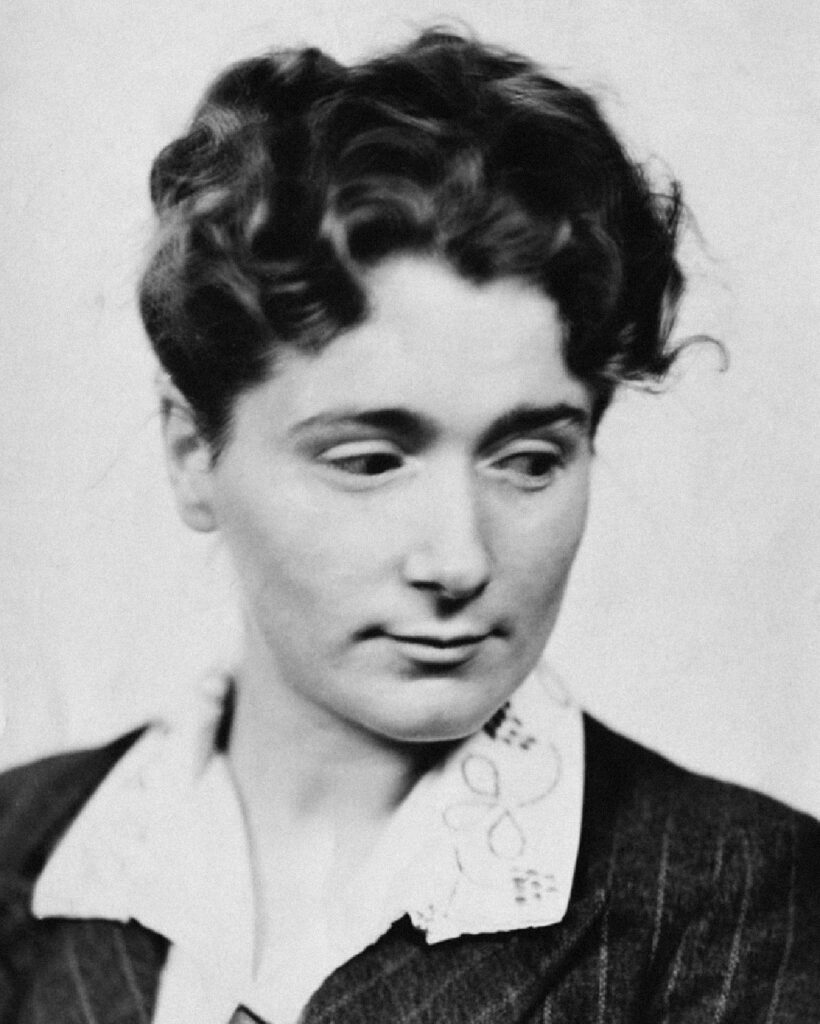
Twenty Minutes of Silence
By Hélène Bessette
Translated from French by Kate Briggs
With a contribution by Kathryn Scanlan
New Directions, 156 pp., $24.50 (paperback)
July 14, 2026
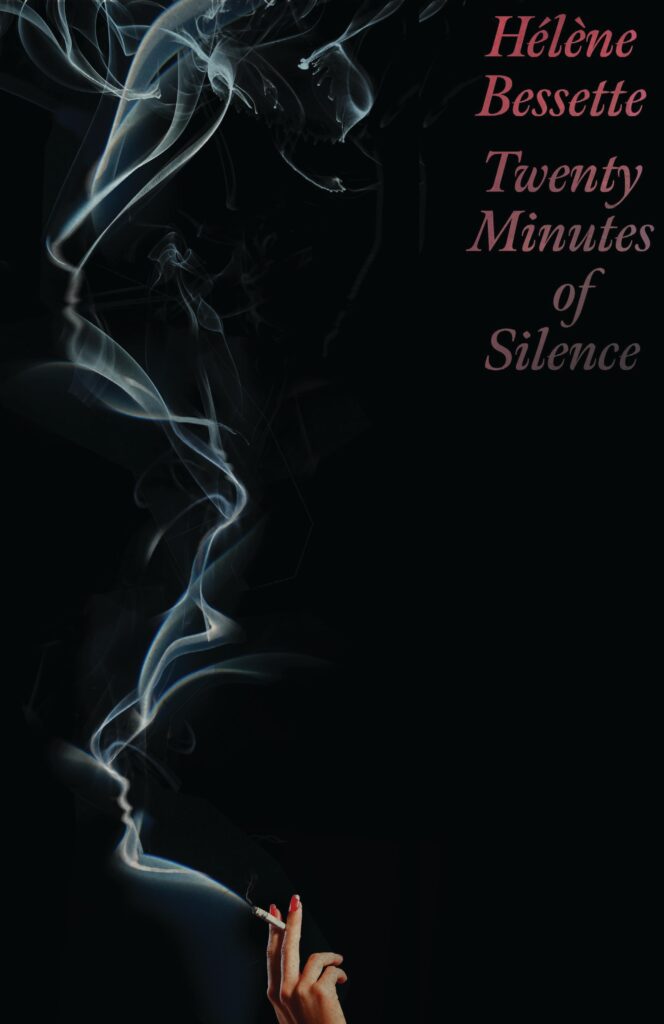
While on vacation with her sons in Normandy, Hélène Bessette overheard a gun go off in their hotel. Local news reported that a boy had shot and killed his father. Intrigued by the event’s proximity, Bessette followed the media story closely and made a novel of it: Twenty Minutes of Silence.

Crimes get reconstructed and defined through the process of narration. The world overturned by a crime relies on narrative to restore and reorder it. In Twenty Minutes of Silence, the story is told and re-told by (mostly) unnamed speakers who opine on the details of the crime. None of the novel’s speakers “develop” into conventional novelistic characters. Pronouns rarely latch onto particular faces or names. The text gallops through multiple mouths, leaving us suspended between voices, rumours, media, legal questions, idioms, and psychologism. The result is a continuous interrogation characterized by drastic shifts between speakers and narration.
The family lives in a house with a gun. The gun goes off. A fifteen-year-old boy puts on his shoes at 3 a.m. while his mother stands in the bedroom with her dead husband. Unattributed voices describe the “millionaire father” who was “a cocksure, self-satisfied social climber,” a typical domestic tyrant. Accusations alternate between police statements and testimony. All this speculation is carried out in the continuous present tense, but history haunts the interpretive gestures we are asked to perform. The father’s gun is used to kill the father, and the father’s gun happens to be a German pistol acquired from his days as a collaborationist with the Nazis.
Set in a small Norman village, Bessette’s novel vocalizes class tensions and social divisions. “Snobbery” gets repeated as a social descriptor. The father is the patriarch of a prominent, wealthy family: the crime occurs among the elite. Questions of status recall the social-climbers of Marcel Proust’s In Search of Lost Time, whose footsteps linger along the beaches overlooking the English Channel where “involuntary memory” was born. Proust’s lustrous syntax came from polishing words until they gleamed. His long-winded sentences accumulate resonance while lengthening, allowing verbs to wind through interior spaces, collapsing the distance between ornamental objects and the minor aristocrats who define themselves through acts of possession. Proustian language sounds poetic, but the form doesn’t borrow from poetic techniques.
A sense of betrayal runs rampant. Will the son betray the mother? Did the mother betray her son? Does gender betray all women absolutely?
In contrast, Bessette makes explicit use of poetic form to tell the truth at a slant. Most of the novel’s sections are titled as poems—“Poem of the Facts,” “Poem of the Questions,” “Poem of the Solution”—a nod to the characteristics of the “poetic novel” which translator Kate Briggs has located in Bessette’s early notes on process in the short-lived journal, Le résumé. In a note at the end, Briggs describes her strategy “as the opportunity to repeat and vary and also to further an intention; a form of active participation.” In collaboration with the author’s spirit, Briggs anglicises certain words to remind “the reader that they are reading a translation, itself a way of participating in Bessette’s aesthetic project,” participating in its effort to depict “what is hard and true and real within the form of what she is still committed to calling a novel.”
“You’re mad, my girl,” Bessette declares on the first page, launching us directly into a section of interior monologue titled “Atmosphere.” A woman at a train station tries to decide what is worth crying over:
“You’re not going to cry over nothing.
In the street.
In other people.
When you’re other people.”
Thoughts stagger down the page, studded by line breaks. Making use of silence and gaps to build tension, Bessette refuses the syntax of aesthetic smoothness. In lieu of dialogue tags, she offers their conspicuous absence: no grammatical fixture to indicate the speaker. Every conclusion is contested by a different voice. Each word vibrates with connotations and other ways of reading. As the book progresses, the reader grows increasingly self-conscious and aware of their participation in creating the story of a crime. The interior monologue ends with two sentences on a single page:
“The victim is the culprit.
The culprit is the victim.”
In Philosophical Investigations, Ludwig Wittgenstein deployed the “poetic” elements of grammar, rhythm, metaphor, and figurative language to disrupt literal-mindedness. Although 19th-century literary realism pledged itself to lifelike representation, the First World War decimated the world as it had been known. Betrayed by the industrialized death wrought by their fathers, Wittgenstein’s generation refused the old forms. Using Martin Luther’s statement that “faith resides under the left nipple” as an example, Wittgenstein implied that Luther’s metaphors become philosophical problems when taken literally. Treating mental phenomena (like memory or perception) as if they are physical realities is how poetic language affects our interior mental state without actually providing new information.
Like Wittgenstein, Bessette brings poetry to bear on truth by showing how literalism leaves nothing true, or cannot express literal truth. She demolishes our social and legal constructions of innocence by playing upon the way we read and interpret language. Legalism takes language literally—it presumes language can mean exactly what it says—and journalism tends to do the same. The absence of figurative language in newspaper reporting underscores the sacralization of the Fact as a building ground for what is shared in common. When facts stimulate an emotional or intellectual response in us, they become pieces in a possible fiction.
True crime builds up a set of templates for “recognizing” the criminal in our neighbours.
In the novel, language establishes each person’s proper place. Language determines what is possible. Language defines the son’s role and ties him to his inheritance. Gradually, the son’s world is replaced by the language used to define his actions within it. A child is “a morass of sadnesses.” Or so we learn in the section titled “Poem of the Questions,” where voices argue the case from all angles behind the cover of namelessness. We never learn how the speakers look or who they are. Instead, we witness the dissolution of their materiality:
“The characters in this story are not solid, they are falling apart.
Why?
Because they are fake characters.”
Although the rhetoric of guilt amplifies suspensefulness, the actual feeling of guilt seems largely absent from Bessette’s novel. Unmangled by guilt, the son and the mother nevertheless indicate feelings of shame—but this shame precedes the murder, emanating from the institution of the family itself.
The fact is, all three members of the family are miserable, disappointed, unhappy. Voices tell us the son is “murdered…psychologically and intellectually, and morally.” The son becomes the “inmate,” the “prisoner”; the father is only “a turned back,” a wall of withholding, the sort of human who smacks children. “Maybe I’m around fifteen years old,” says the child who is being kept in a “special facility, under psychiatric supervision,” where experts aim to relieve him of “his anxiety” and protect him “so he’s not in a position to retract anything else,” thereby doing damage to the prior confession. Narratives need protection, too.
What gets normalized as “natural” seems terribly true. By consequence, the entire family is implicated by the murder—or rather, the structure of the family itself. The mother is a “bourgeois woman,” as repeatedly described, “nervous, dissatisfied, irritated, belligerent, preoccupied, troubled, querulous, unhappy,” a typical “woman” in the mouths of men. “She’s something, that woman,” someone says of the wife. She is “a real character,” a being of significance: “This is not a woman to ruin twenty minutes of silence because of a stupid, absurd, grotesque game of dressing.” But she is also a woman who may have killed her husband and let her son take the fall for her crimes, “A woman who orchestrates twenty minutes of silence coldly, intelligently.” There are rumors of the mother’s extramarital affairs, the possibility that the son belongs to a different father, which would make the crime a way of forming a legitimate bourgeois arrangement for her son. As for personality and personhood, the wife even narrates herself true to the stereotype: “My nerves are wrecked, most likely due to my sexual extravagances.” She hates “raised voices” and fears her husband’s temper. “I am high strung,” she concedes, and “very ticklish.” She “hardly ever” reads books—she doesn’t have time—but she flipped “through a detective novel” on the night of the murder. The novel was owned by her husband. A little murder (whether of the patriarch or the family he rules) liberates the wife “from the tyranny of that man.” Meanwhile, “the silent bourgeois night of sleeping towns” settles across the land where houses sleep as women lay awake inside them.
Mobilizing the poetic technique of repetition, Bessette selects a palette of words to repeat and reframe. A repeated word assumes the patina of fact. By making frequent use of the word “naturally,” for example, Bessette puts pressure on the family structures that have been naturalized and constructed as socially normal. “Naturally, she didn’t love her husband. He didn’t love his father.” With each assumption, the circles of implication expand. The prevalence of clichéd language makes it all feel so natural, so realistic, so true to form.
New conspiracies populate the page as the nuclear family convulses and cracks beneath the pressure of its unsatisfiable demands. Voices argue over why the mother would have the son carry her guilt for her. She “does want to spare him,” a voice says. “It’s natural, which means it’s not true, for nothing in this story is natural, but let’s proceed as though it were.” The mother “is responsible for her son’s crime.” Certainly, she can’t be innocent of it. But “WHAT wrong she did remains to be seen.”
“Naturally, the crime notwithstanding, she did wrong.
She was that kind of woman.
It’s common knowledge.”
A sense of betrayal runs rampant. Will the son betray the mother? Did the mother betray her son? Does gender betray all women absolutely? Can the cruel rich father even be betrayed, since he only exists as a stereotype? Are these characters worthy of loyalty? Isn’t the family built on a series of betrayals? But “WHAT HAPPENED DURING THOSE TWENTY MINUTES OF SILENCE?”
Explanations and theories stack up. “Because he wasn’t loved,” they say of the son. Because she wasn’t loved, we think of the wife who lost her youth to this brute. But these speculations only amount to a “silent story” that “runs from silence to silence.” Constructed and posed and reevaluated on the basis of the forces and interactions to which language subjects them, the characters never become accessible to us. We never inhabit their interiority, but only observe the air of the house and family “troubled by the scent of revolver.” The experts explain the adolescent’s intent to the audience. The unhappy childhood creates the victim who becomes the criminal. The adolescent blooms from the terrain of a given reading. Any action or gesture could be a symptom or a sign.
Interpretation, after all, makes you the main character, the star of the show, the final authority in determining how the story is understood.
“What a story we tell, naturally it’s not a very nice one,” the son acknowledges in the subsection titled “The Son’s Narrative.” In the moment of the crime they weren’t “father and son” but “strangers. Worse than that. Enemies.” As if spoken in an aside to his father or mother, the son says “It’s you or me, one of us must fall. Inevitable.” The father’s power, as represented by his symbolic “authority,” ultimately “collapses before the barrel of a gun.” Recounting an earlier betrayal, the son says:
“Naturally I forgot this: the first time my father shut me in the dark cupboard, and that time my mother grabbed me by the hand and we ran as fast as we could to catch the bus just as it was pulling away.
I was maybe 2 years old.
It goes back a long way, as you can see.
I thought it was over: that the version of the crime I confessed to would set me free.
But after all your questions, I retracted my statement and now, here it is again.”
Reiterating the crime turns them into different characters, the boy says, not “father” and “son” but “strangers.” The boy-son-child-stranger is stunned by the “sensational, unexpected, stunning” experience of “looking on from the outside at the person they’re interrogating: the criminal.” The child isn’t the killer. “The criminal is someone else.” And this “someone else” is the child as the world sees him when rendering him the author of the crime.
Philosopher Stanley Cavell once said that caring about specific characters involves caring about “the utterly specific words” they say in a particular place and time. To care about a character in Shakespeare, for example, resembles caring about a person: both commit us to remembering, and memory attends with “utter specificity” to the person before us. Yet it is difficult to care about characters who barely exist in their own utterances. By estranging us from the speakers, Bessette makes the reader responsible for the specificity of their interpretation. The character’s “bourgeois sadism” is consumed by the bourgeois reader who recognizes himself in its possibilities. “Killing someone for real is no longer enough, you have to kill for entertainment now.” The first time for fact, the second time for fiction.
“The fiction belongs to the reader,” wrote Hélène Bessette. I learned this from Kate Briggs’ essay, “What is the Poetic Novel?” But, to be fair, Briggs is not just Bessette’s translator; she has also translated two volumes of Roland Barthes’s lectures and seminar notes, namely, The Preparation of the Novel and How to Live Together. And it was Barthes who said in “the Death of the Author” that the writer’s “only power is to mix writings, to counter the ones with the others, in such a way as never to rest on any one of them,” which happens to be precisely what Bessette accomplishes in this novel: she leaves the text open, unfinished, ready for the reader to make its meaning. Tasked with interpretation, the reader might find herself overlooking how language itself manufactures each character in accordance with stereotypes about class, gender, sexuality, and age. Interpretation, after all, makes you the main character, the star of the show, the final authority in determining how the story is understood. This applies to me, the critic, who performs a version of the text in my interpretation, an act which remains dependent on my position in relation to both the language and the culture I inhabit.
In 1955, when Twenty Minutes of Silence was first published, television and magazines were developing an audience for the family romance. Like the genre known as true crime, the family sitcom or daytime soap opera hinges on the thrill of pilfering through the secret interiors of others. We speculate who might be at risk behind closed doors, who might be secretly plotting a crime, who might be molesting a child. Alongside dramatic theories of motivation, true crime builds up a set of templates for “recognizing” the criminal in our neighbours. But the frisson of the blame-and-shame cycle doesn’t offer a solution to family violence so much as an acceptance of it. We resign ourselves to what happened by indicting the individuals rather than the system. The plot feels foreordained. We settle for the lesser devil. Parricide makes an inevitable claim upon the nuclear family’s future.
Legal justice is another fiction that we participate in constructing. The name of the crime creates the criminal identity, as when “the young parricide was immediately taken into custody.” The criminal literally becomes the crime, becomes part of its historical lineage, as sourced from ancient tragedy and preserved in our legal term for the killing of the parent. The vaunted neutrality of legalese alienates the subject: it renders us “other” for the purpose of the trial. By setting up a linguistic barrier between everyday life and our notions of justice, legalese sanctifies itself as an exclusionary lingo managed by attorneys. A person described by the word “murderer” remains a mystery. The label denies us the possibility of empathy or shared perspective; no one wants to acknowledge the “murderer” within their own mind. By cloaking our thoughts in legal language, we find ways to imagine that the “murderer” is nothing like us. Bessette plays with this misapprehension by using testimonial forms against the grain, running inscriptions back and forth across each other, such as when the boy offers an interpretation of his father’s beatings as displays of “total ownership” over the son’s body. The father beat the son because “he belonged” to him. A wealthy father can only relate to objects he possesses. “I didn’t kill my father,” the son says, “I killed my landlord.” Capitalist notions of “belonging” privilege the idea of possession. Under such conditions, the legal options are limited: one can own, borrow, or rent. So what does it mean to be part of a “family” where lordship exists?
Other writers have explored these questions by queering our notions of community. In an essay titled “My Community,” Robert Glück underscores how we understand ourselves in relation to others. “I look at my neighbors so I can know who I am,” writes Glück. Language creates the self, a fiction elaborated by the conditions of its community. “Shame is a kind of fear, and fears are what organize us from above,” Glück observes. The performance or legibility of shame is always political, or related to the judgement of a community. Twenty Minutes of Silence sinks the reader into the ping-pong game of projection and disavowal, internal shame and external blame. “We judge other people on the basis of ourselves,” says one of the voices in Bessette’s novel. “When a crime is committed, it’s not the criminal who’s afraid, it’s everyone else: the bystanders, the witnesses, those who happen to be there by mistake,” adds another voice.
Crimes live between actions and quotations. “Whose fingerprints were found on the detective novel in the father’s bedroom?” The present—that moment when the murder covers the headlines and becomes a national spectacle—remains impossible to articulate as a single, credible story. But something else troubles my reading, and this something else is best expressed in the author’s original language, namely, French. “Le non-dit,” in Edmund White’s telling, indicates the “compost heap” of unmentioned things that are unsaid or the unsayable. Affection, tenderness, conviviality—all these eminently human affects land in le non-dit of Bessette’s novel about a family where “love” is the least said of all.
This essay was written under the sign of Walter Benjamin, whose words from the Theses on the Philosophy of History continue to haunt my readings . . . “Is there not an echo of those who have fallen silent in the voices to which we lend our ears?”
Alina Stefanescu was born in Romania and lives in Birmingham, Alabama. Her debut fiction collection, Every Mask I Tried On, won the Brighthorse Books Prize (April 2018). Alina’s poems, essays, and fiction can be found in Prairie Schooner, North American Review, World Literature Today, Pleiades, Poetry, BOMB, Crab Creek Review, and others. She serves as editor, reviewer, and critic for various journals and is currently working on a novel-like creature. My Heresies, a poetry collection was published by Sarabande in late April 2025. More online at www.alinastefanescuwriter.com.