
Punchline
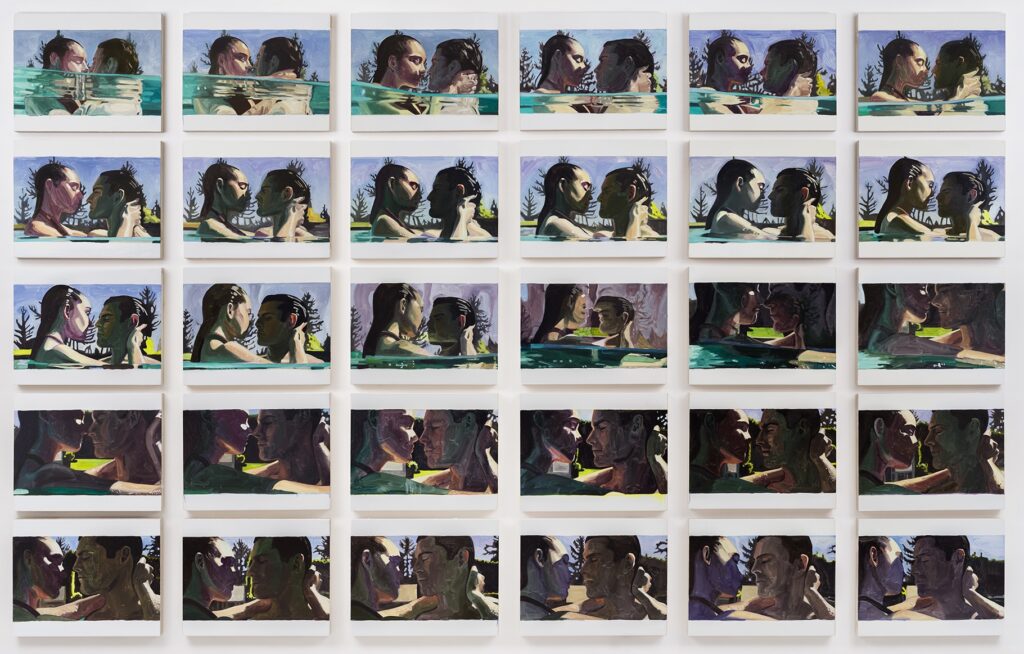
The comedian stood a magnificent fourteen inches taller than me, and so I could not think or know that I had ever raped him, or that he would say this was one of the reasons we had to break up. First I was agog, then defensive. We were facing each other on my blue couch encased by blue windows, in an apartment I had said I never wanted to leave.
You coerced me, he said or yelled.
I had not raped the comedian in the year we had been together, but I had occasionally described to others and privately thought of my relationship with him as being incredibly fun. I knew how frequently I had been laughing too hard to think or speak; how I had experienced our relationship as equal parts important and involuntary, like breathing. After I had been raped in college years ago, the only language exchanged after was a text from the effective stranger, saying, sorry i was so aggressive :/. But this kind of linguistic clarification, I knew, was rare.
Still, I wasn’t the kind of person who worried about killing someone while driving a car in their sleep, and I wasn’t a professor who raped her students, or anyone, really. Actually, I was a very beautiful woman.
You literally initiated fucking me, I said or yelled.
I didn’t want to. You actually fucking smell, he said or yelled.
After I had told the comedian I had tested positive, he had appeared at my door wearing a shirt that literally said I <3 My Girlfriend Stay Away From Me.
Just before he had come over, the comedian had sent me an email from his day job. It read that, while I was very good at being a girlfriend, my presence in his life constituted an insurmountable hurdle to his comedy career. He only mentioned the sex we’d had when he appeared at my house five minutes after he had sent that email, after I had opened up the door while saying, in a voice I intended to be prophetic: You are going to end up alone, overdosing on drugs in a hotel room in New Jersey.
I do not, I said or yelled. Also, you’re a fucking alcoholic. And you’re being insane.
Saying he was an alcoholic was smart because it indicated he had a diseased understanding of agency; it was also true.
Before he met me, the comedian had spent years of his life in Nyack, New York, working as a waiter at a restaurant with a motto he could still recite in Japanese. He told me he still dreamt of massive woks of rice burning, the grains turning into black ants. Before every shift, he had filled a large 7/11 coffee cup with whiskey; after, he would buy a twelve-pack of beer to drink alone in his studio apartment. He had been sober for a year when I met him, but he had never really gone to AA because so much had happened to everyone in AA, and he said that no one understood what it was like to be drinking alone in a room with nothing happening. The comedian really loved me, I knew, for how I understood this. My father had been a mute alcoholic, the kind to whom I could say something like, I fucked my math teacher, and his expression would not shift, change, or happen.
When the comedian moved to Brooklyn, he started doing comedy. What he called doing comedy meant getting anywhere from two to forty strangers to laugh at what he said in various basements around the country. He was really good at it; laughter inevitably occurred. While he broke up with me, I thought of that documentary where people were strapped down and tickled until they screamed.
You always fucking made me, he repeated.
You ate me out on the floor of your dad’s lake house, I said or yelled.
I absolutely hated doing that, he said or yelled.
It wouldn’t have been impossible for me to sexually abuse the comedian, I guess, although it would have required access to drugs I did not know how to access. And he knew how every single kind of alcohol tasted, though we never drank together. I did not know how to invoke the sex we had had; how, for a whole year, he had put his hands on my hips in my bedroom, removed his own pants, bucked his own hips, finished inside of me, and laughed at what I said with palpable ease.
I looked out the window at the sky, and all I could think was that it was mercilessly blue. I could not choose its colour. I had always thought how, more than other people, the comedian was unaware of what he was feeling as he felt it; frequently I had explained to him that he was crying, that there was wetness on his face.
But the ducks, I said or yelled. I felt a sharpness at the end of my nose.
At the lake house, in a paddle boat, we had seen twelve baby ducks and their mother, and he had actually cried when the father duck appeared. The comedian had cried easily at any idea of a coherent family, and it was always moving because of how incredibly tall he was. His day job was in my local psych ward, and it was taxing and difficult to get people the help they needed. People had done ambiguous, strange things, like try to kill themselves by swallowing iPhone cables. Sometimes, on his lunch breaks, he would come over just to lay his head on my chest and cry, and I would put my hand through his thinning hair; I’d tell him that he was helping. When he had cried at the ducks, I had taken this as real evidence we would have our own children who we would cry over; once, he told me he had already named them.
As I sat there, I learned that I would forget their names in the same way I would forget the comedian by the time I was thirty. I had not forgotten him yet, because he was sitting in front of me, but I would.
You coerced me, just like you coerce everyone, he said or yelled. His voice had gotten strangely high, then, and sharp in a way that was completely foreign to me. Just like my ex coerced me.
You can’t be coerced into proposing on a rooftop in Spain, I yelled, because the comedian had proposed to his ex on a rooftop in Spain.
Then I retreated and sat there quietly, careful to not move any of my arms or to touch him.
When he packed up his things, he took only the plastic toothbrush he had in my bathroom, and he forgot the suit he had kept in my closet. He had worn the suit to the B’Nei Mitzvah of the children I had nannied, where he had also cried at the D’var Torah.
When he left the apartment, I vomited twice.
We didn’t talk for a year. The week the Pope died, he texted me out of the blue, saying that he was sorry to hear about my Pope, and that, the day we broke up, his brother had told him his wife was pregnant. He asked if I wanted to see pictures of the baby.
No, I replied. This was significant: it is the only time I have ever turned down seeing pictures of a baby.

After I threw up, I called my friend who had moved to Los Angeles. I said the comedian, who had seemingly loved me more than anyone else on this Earth, had broken up with me for reasons I did not understand in language.
Just come here, my friend sighed, and when she said that I realized I was crying.
The comedian and I had had COVID together the past week, so my apartment was still filled with our balled tissues, empty caskets of pill containers. After I had told the comedian I had tested positive, he had appeared at my door wearing a shirt that literally said I <3 My Girlfriend Stay Away From Me, with soup, ice cream, and orange bottles of cold medicine, and then he told me he wanted to kiss me to transmit the illness. He kissed me, and he tested positive, and he stayed; we had sex every single day for a week, sweating through our fevers, touching our genitalia in a haze. We watched Olympic Skateboarding, Olympic Swimming, Olympic Women’s Artistic Gymnastics, Olympic Men’s Artistic Gymnastics. Olympic Surfing we kept on for hours, watching the scrim of the bodies in the black wetsuits waiting, waiting to be able to stand on a wave. It was unfair, I had said—it was random if the waves would ever come, and at what quality, interval, height. At one point I had put my leg over him and he had whined that he was hot, so I had removed it. Thinking about this, I knew I needed to leave the State.
The sky outside of LAX was the colour of warm milk. I had gone to college in Los Angeles, but I had been raped when I was studying abroad, in Europe. I knew that people raped people everywhere, but it was almost too nice out here, I thought, as I got the Uber; there was no excruciating winter like there had been in New York, where I had sat alone inside, painfully calculating what I was capable of doing to another person, or what they were capable of doing to me. When I had been in Los Angeles, I had just done things with men like make pancakes on hotplates in their dorm rooms, or thrown beer into increasingly far-away cups. My friend liked living here with her fiancé who wanted to hike and to organize music festivals for people to escape. When we had been in college together, my friend had seen a lot of her family members die from cancer in real time. We were close, in part, because I had never known what to do after this besides buy her lunch, and she always thought that was enough.
It didn’t make me sad, but worried, that I didn’t understand why anyone would do that. Build a Burger King, I mean.
Her house had a bright blue exterior, sans-serif numbers on the side. She opened the door with her valance of blonde hair, saying I got you lunch.
I hugged her, and I thanked her. I said something indicating that I hadn’t slept or eaten in thirty-six hours.
She pointed a filed nail to a plastic container of ceviche, with all the little slivers of fish stuck in a cup with swatches of green avocado. Her house was as clean as a hotel, with a cat who stalked it like an eyelash in my cornea.
Thank you, I said, and I sat down and stared at the fish. She moved to grab me a fork from the kitchen, talking about how the place down the street sold this ceviche for five dollars, and I could go there any time when she was working, which she would have to do a lot, unfortunately. She worked at a job that created Leadership Trainings, and the beginning of the school year was a busy time for them.
Maybe you can train me to be a leader, I said, and she said, shut up.
I looked at the fish and the crinkled bag of chips next to it. The fork was there like a weapon.
Well, I always hated comedy, she said.
I always told him that my friends were just as funny, so I didn’t need to go to any shows, I said.
Exactly, she said. Eat.
My great-grandparents were Russian peasants, he had said to me; they ate gruel. Can you imagine me telling them that I could get a smoothie?
When I ate the fish, I remembered I had hands.
After, in my friend’s shower, I began practicing a tight five that I was confident I would never perform in front of anyone.
My ex talked about doing standup like he was going to the Battle of Fallujah, I said to myself. I didn’t imagine anyone laughing. When I turned off the water, I could hear birds ricocheting outside of the window, as they fled the whiffs of burnt brush from the far side of the hills.
I went to the beach in Malibu alone on my birthday because my friend had to work. I brought a 700-page book about a man who lived on the fjords alone in Norway. The sides of the cliffs on the beach looked, I imagined, like fjords. When I had gone to Istanbul the summer before, I kept saying that it looked like Queens. There was a Burger King walking distance from a 2,000-year-old mosque. It didn’t make me sad, but worried, that I didn’t understand why anyone would do that. Build a Burger King, I mean.
I did not miss the comedian, actually, and he did not text me for my birthday. I had not cried about this. I had felt so good in Los Angeles, eating steak with my friends; I had been around so many people who actually liked me that it had occurred to me that he really hated me. My friends were not the most serious people on Earth, but they did not spend entire meals debating what kinds of objects would fit up a dog’s asshole, like his friends had. Once, I remember, the comedian told me he hated any room where people said the word facile. Over the past few days, I had actually used the word facile, and, really, I liked it.
On the beach, texts came in from other people, like my parents. A girl I had not seen since summer camp when I was eleven wished me Happy Birthday on Facebook. I did not think about how I now had to maintain that the sex I had had with the comedian, which was sometimes quiet and desperate, sometimes with the windows open and rain pouring, was not ever rape. I put my feet in the sand; I sipped a smoothie. I remembered dating a guy who was having a psychotic break, which involved him sweating, and telling me how amazing it was that on every street in New York you could buy a smoothie. My great-grandparents were Russian peasants, he had said to me; they ate gruel. Can you imagine me telling them that I could get a smoothie?
I thought, I should write a book about that guy. I read about the man alone on the fjords who had loved just one woman, but that woman was now dead. The book was one sentence. Heat pounded my face from an indifferent sun, and the waves fell without surfers.
Is that a good book? he asked, with an indiscernible accent.
I looked up from the book, to the boy. The boy had an almond-shaped tuft of fat around his midsection, a smile like I had already slapped him.
Yes, I said.
I will have to read it, he said.
It’s one sentence, I said.
And such a big book! he said. And then he stuck out his hand, and he said, Giovanni.
Amanda, I said, shaking it. I was in twelve square inches of clothing. His black hair was falling over his face, which was not exceptionally handsome from any angle, let alone the one I was looking up from.
Do you live here? he asked.
I’m visiting from New York, I said.
New York! he said. Carla, she is from New York. We’re from Rome.
Carla was piling long, black hair in her hands, and looking at me like she had no problems she could describe. I don’t know if she had been next to Giovanni the whole time; I could barely see their faces for the sun, the blue.
Do you see that hill over there? Giovanni said, pointing to the fjords.
Carla was still staring at me, her hands pulling through her hair like fishermen untangling a net.
You should come hike it with us, he said.
I was always saying things to them like, the AI cannot feel the sun on its face, and it really worked.
I looked at Carla and I figured that the worst thing Giovanni could do to me he would not do with Carla there. Or, I thought, What was the worst thing Giovanni could do to me.
The smoothie was a pink husk of hot plastic. In the six foot tall black waves, someone went.
The incline of the hill made it so that Carla’s beautiful ass was at my head, and I was looking at it as we walked up, the gentle sag of her black bathing suit bottoms over the bumps that were her skin. Giovanni led us and spoke down to me. I said in New York I was a professor, and Giovanni said what most men said when I told them my job, which was that it must be impossible for me to do, since the boys must feel a love for me akin to a fever. I said that it was just fine, that the boys in my class were really children, because they were; several of them still had metal braces, wore pajama bottoms with prints of cartoon characters. I was always saying things to them like, the AI cannot feel the sun on its face, and it really worked.
Giovanni said, I have a business renting out vespas. I said I would like to ride a vespa, although I was very scared when the comedian had taken me on the back of one, last year; I had just repeated in his ear the word okay, okay, okay, as he drove.
Okay, okay, okay, I remembered as I walked. The comedian had said my words back to me, mocking me, with real affection. He was the only person who had known I had said that, and now I didn’t know who would know this, about me.
They are beautiful machines, Giovanni said.
He said nothing in Italian to Carla, who was extending and contracting her fingers at her side. There was a small metal rope cordoning us off at the edge of the cliff, but Carla balanced on her bare feet like the videos of goats I had seen. When I asked why they were in California, he said they had just wanted to visit, but Carla had not indicated any of their wants. I didn’t say that it was my 27th birthday. The sun was hitting Giovanni’s gelled head like a piece of metal.
At the top of the fjord you could see cars slinking down the coast too-slowly, a drugged snake. The few people on the beach looked like the black specks falling around Carla’s eyes, who was smiling at me softly when I turned to her.
No English? I said, and she shook her head. I could not tell the nature of their relationship, but I did not ask; I did not know whether there was a response I would have understood.
Giovanni’s back was to us, his hands on his hips encased by blue board shorts. He was pressed to the view like he was fucking it. Carla was not looking at the view, but at my face, although the view was everywhere, and her teeth were growing whiter.
Carla learned in, and she kissed my cheek and then, quickly, my mouth. Her lips were dry, and she retracted to wet them with her tongue, and I did the same. Her eyes glinted like the backs of beetles, with dark lines underneath, before she leaned back in and kissed me again. I moved my mouth so that my eyes were closed. I could not control how it felt, which was pretty good. A high, hot wind clouded the sound of Giovanni’s accent as he stood away from us, staring at the sea. It lasted only for a moment, before she raised her hand to my cheek and lowered her eyes.
Beyond his texts about the Pope and the baby, I never spoke to the comedian again. When I went back to New York, it took me two years to piece back together action and language. People would ask me if I was dating anyone, and I would, genuinely, have no idea what they meant. When people said they dated people, meaning they talked to one other person all of the time, like the comedian and I had—most days he had texted me things like, you are the only person who is allowed to do surgery on me—I said, we should not have the technology to do that. I didn’t want to coerce anyone, and when I started to like someone else again, when I started wanting him to sleep next to me, the only words I had for it was that it was like he had changed my dominant hand.
My friend was visiting me in New York when the beach I had gone to in Malibu burned. We stood together in front of the television, watching the fire across the fjords; I could not see the little silver rope. I had no way to contact Giovanni or Carla, although the only thing I would want to say to them was, Look. I was sure they were already looking. My friend wasn’t in New York because she had to evacuate, actually, but because she was having her apartment fumigated for termites.
I went to this party, she said, as her fingers combed through her blonde hair, as we stared at the fires repeating across the screen. And I said to everyone, there are so many termites in Los Angeles; this is my third time having an apartment fumigated. And, I thought everyone would say, oh yeah, the termites. But it had never happened to anyone before, at all.
When she returned to Los Angeles, she sent me a photo of the thin layer of ash that had covered her belongings. It had turned her hairbrush grey, congealed on her white bedspread as a membrane of silver. It was because the window was open; it had been left ajar by someone else.
Amanda Larson is a writer and professor from New Jersey. Her first poetry book, Gut, was published in December of 2021 by Omnidawn Publishing, and was awarded the Norma Farber First Book Award from the Poetry Society of America. She lives in Brooklyn, where she is writing a novel and a screenplay. Her work can be found at amanda-larson.com.